In recent years, research on sensing technologies for in-home motor function assessment has advanced considerably from the perspective of preventive medicine. At the same time, since such assessments involve measuring activities of daily living using sensors, careful consideration must be given to sensor placement and data acquisition conditions — particularly with regard to occupant privacy.
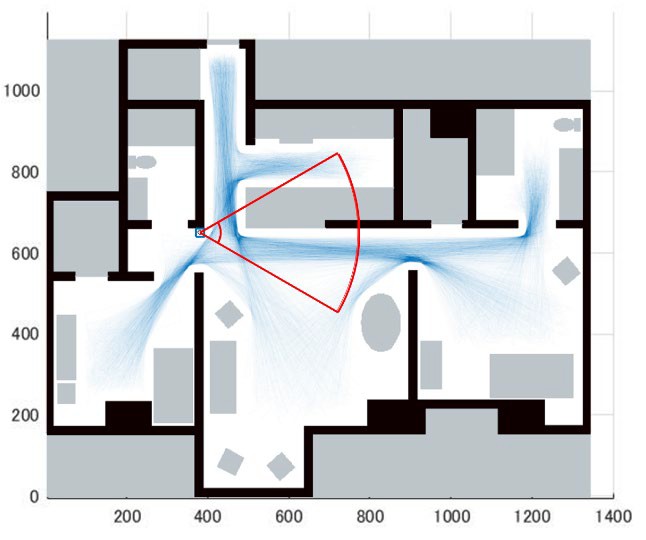
To address this, we develop a system that proposes optimal sensor configurations for motor function assessment within residential environments. By simulating occupant movement paths and assessable activities based on floor plan data, the system generates evidence-based recommendations for sensor placement that balance measurement coverage with privacy protection.
Publications